What Insurance Companies Don't Want You to Know After a Car Crash
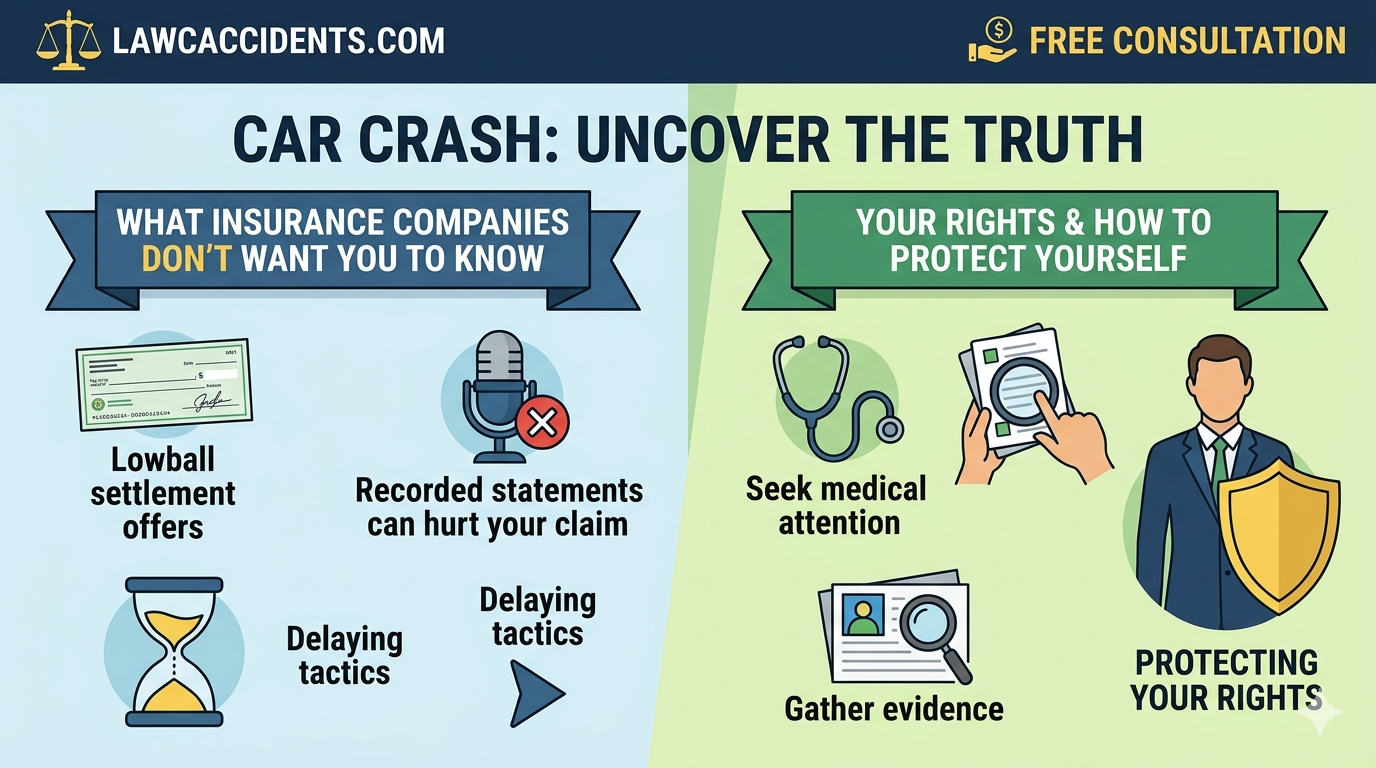
Why insurance companies act fast — and why that's a red flag
Within 24–48 hours of a serious crash, you may get a call from a friendly-sounding claims adjuster. They'll express concern for your wellbeing. They'll ask how you're doing. They might even offer you a check on the spot.
That's not kindness. That's a closing tactic.
Here's why they move fast: your pain and lost wages are real — but your long-term medical costs are unknown. The full extent of a back injury, a traumatic brain injury, or nerve damage often doesn't reveal itself for weeks or months. Insurance companies know this. By settling quickly, they lock in a low number before you understand how serious your injuries truly are.
The 7 tactics insurers use to undercut your settlement
Adjusters routinely ask you for a recorded statement shortly after the crash, framing it as a routine part of the process. It is not routine. Anything you say — even an innocent "I'm feeling better today" — can be used to reduce or deny your claim. You are not legally required to give a recorded statement to the other driver's insurance company.
Insurers often hire their own medical experts to review your records and argue your injuries are pre-existing, exaggerated, or unrelated to the crash. These doctors never examine you. They review paperwork, and they are paid to find reasons to reduce your payout. Counter this by getting thorough documentation from your own treating physicians.
A slow-rolling insurer isn't just being bureaucratic — they're counting on your financial desperation. Medical bills pile up. You miss work. Eventually many victims take a lowball offer just to pay rent. Every state has statutes of limitations on car accident claims (typically 2–3 years), so don't let delay make you desperate.
Insurance investigators actively monitor Facebook, Instagram, and TikTok after claims. A photo of you at a birthday dinner, a video of you walking your dog, or even an old post can be used as "evidence" that your injuries aren't as severe as claimed. Limit your social media activity until your case is resolved.
Economic damages — medical bills, lost wages — are straightforward to calculate. Non-economic damages like pain, suffering, emotional distress, and loss of enjoyment of life are not. Insurers will often assign a shockingly low multiplier to these, or dispute them entirely. An experienced accident attorney knows how to fight for full non-economic compensation.
In states with comparative negligence laws, your settlement decreases based on your share of fault. Insurers routinely try to assign you 20%, 30%, even 50% responsibility — sometimes using little more than a speculative interpretation of the scene. This directly cuts your payout. Don't accept their fault assignment without challenging it.
The word "final" is the most important word in any settlement offer. Once signed, you surrender all future claims tied to the accident — permanently. Many victims don't realize this until they're facing a second surgery and have no legal recourse left.
What you should actually do after a crash
At the scene
- Call 911 and get a police report — this is your most important document.
- Photograph everything: damage, skid marks, traffic signals, road conditions, injuries.
- Get the other driver's name, license, insurance info, and plate number.
- Collect contact info from witnesses before they leave.
- Say as little as possible to other parties. Don't apologize — even "I'm sorry" can be construed as admitting fault.
In the days that follow
- Seek medical attention immediately — even if you feel "fine." Adrenaline masks pain. Many serious injuries surface 24–72 hours later.
- Keep a daily journal documenting your pain levels, limitations, and how the injury affects your daily life.
- Save every receipt and document every expense related to the accident.
- Notify your own insurance company — but give minimal details until you speak with an attorney.
- Do not post anything about the accident on social media.
The hidden value you may be leaving on the table
Most car accident victims only think about their ER bills and car repair. But a full car accident settlement can — and should — include:
- All past and future medical expenses — including physical therapy, surgery, prescriptions, and in-home care
- Lost wages — not just what you've missed, but what you will miss during recovery
- Loss of earning capacity — if your injuries permanently reduce your ability to work
- Pain and suffering — ongoing physical and emotional distress
- Property damage — fair market value replacement, not just repair
- Loss of consortium — impact on your relationships and family life
- Punitive damages — in cases involving drunk driving or extreme negligence
When you absolutely need an accident attorney
Not every fender-bender needs a lawyer. But you should strongly consider hiring one if:
- You suffered any injury requiring medical treatment
- You missed work due to the accident
- Liability is disputed — the other driver claims it was your fault
- Multiple vehicles or parties were involved
- A commercial vehicle (truck, rideshare, delivery) was involved
- The insurance company is delaying, denying, or offering an insultingly low number
- You don't fully understand what you're being asked to sign
The majority of accident attorneys work on contingency — meaning they don't charge a dime unless you win. The consultation is always free. There is no downside to at least getting a professional opinion on your case.
Get a free case evaluation today
Our network of verified accident attorneys is available 24/7. No fees unless you win. No obligation.
Talk to a lawyer for free →
Comments (0)