Average Car Accident Settlement in Pennsylvania 2026: Limited vs Full Tort Options
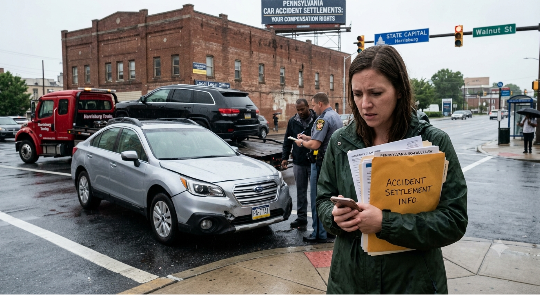
Is Pennsylvania a No-Fault State? 2026 Settlement Guide for Limited Tort vs. Full Tort Drivers
Quick answer: Pennsylvania is a "choice no-fault" state — a hybrid system found in only a handful of states. When you buy car insurance in Pennsylvania, you must pick in advance either limited tort (lower premiums, but you generally cannot sue for pain and suffering unless your injury is "serious") or full tort (higher premiums, full right to sue for non-economic damages). This single checkbox on your auto policy — often signed years before any accident — can be the single biggest factor in what your settlement is worth. Typical 2026 Pennsylvania settlements range from about $8,000–$20,000 for limited-tort soft-tissue claims to $300,000+ for full-tort serious injury or permanent impairment cases, depending on fault, coverage, and medical documentation.
If you want to compare Pennsylvania’s system to other states, you can also see our nationwide guides: Car Accident Settlement Calculator 2026 and Car Accident Laws by State: 2026 Complete Update.
What "Choice No-Fault" Actually Means in Pennsylvania
Pennsylvania does not fit neatly into the usual “fault” or “no-fault” boxes — it is a hybrid. Every auto policy must include at least $5,000 in First-Party Benefits (PIP), which pays your medical bills after a crash regardless of who caused it. On top of that, Pennsylvania law (75 Pa.C.S. § 1705) requires every driver to elect one of two tort options when buying insurance:
| Option | Premium | Right to Sue for Pain & Suffering |
|---|---|---|
| Full Tort | Higher | Unrestricted — full right to sue for pain and suffering |
| Limited Tort | Lower | Restricted — you usually need “serious injury” or an exception to sue for non-economic damages |
If you never actively chose limited tort, Pennsylvania law generally defaults you to full tort. That’s why it is worth checking your declarations page before assuming you are stuck with limited tort. Many Pennsylvania injury lawyers describe this tort election as “the most important box” on your policy.
For a plain-English breakdown of the choice no-fault structure and early claim steps in Pennsylvania, see our state-by-state accident law overview, which includes a section on choice no-fault states like Pennsylvania, New Jersey, and Kentucky.
The "Serious Injury" Threshold Under Limited Tort
If you have limited tort, you can still recover 100% of your medical bills and lost wages. What is restricted is non-economic damages — pain and suffering, emotional distress, and loss of enjoyment of life. To recover those under limited tort, your injury must meet the statutory definition of “serious injury” under 75 Pa.C.S. § 1702.
Pennsylvania defines “serious injury” as a personal injury resulting in:
- Death
- Serious impairment of a body function
- Permanent, serious disfigurement (for example: significant scarring or deformity)
In practice, injuries involving surgery, long-term loss of function, permanent nerve damage, or visible scarring are more likely to pass the serious-injury threshold. However, borderline cases are heavily contested, and insurers often argue that your limitations are “not serious enough” to unlock pain and suffering under limited tort.
Key Exceptions That Restore Full Rights Even With Limited Tort
Several statutory exceptions can restore your right to sue for pain and suffering even if you elected limited tort. Examples include situations where:
- The at-fault driver was under the influence of drugs or alcohol.
- The at-fault vehicle was uninsured or registered outside Pennsylvania.
- You were a pedestrian or bicyclist, not a vehicle occupant.
- You were injured in a vehicle not intended for personal use (for example, a delivery or commercial vehicle).
- The crash was caused by a defect in the design, manufacture, repair, or maintenance of a vehicle (product-liability scenarios).
If you are unsure whether an exception applies to your case, a Pennsylvania car accident attorney can review your policy and crash facts to determine if limited tort actually restricts you, or if you effectively have full tort rights despite your election.
Pennsylvania's Comparative Negligence Rule (The 51% Bar)
Pennsylvania follows modified comparative negligence with a 51% bar, under the Pennsylvania Comparative Negligence Act (42 Pa.C.S. § 7102). This rule controls whether you can recover damages at all and how much you receive:
- You can recover damages as long as you are 50% or less at fault.
- If you are found 51% or more at fault, you recover nothing.
- Your percentage of fault is subtracted directly from your award.
| Total Claim Value | Your Fault % | Outcome |
|---|---|---|
| $80,000 | 20% | $64,000 |
| $80,000 | 50% | $40,000 |
| $80,000 | 51% | $0 — claim barred |
The 50/51% line is one of the most heavily litigated issues in Pennsylvania car accident claims. Insurers often try to assign just enough fault to the victim to bar recovery. Strong liability evidence — photos, vehicle damage, crash reports, and witness statements — is critical for keeping your share of fault at or below 50%.
Average Car Accident Settlement Amounts in Pennsylvania (2026)
Because Pennsylvania’s system combines first‑party PIP, tort elections, and comparative negligence, settlement ranges depend on both injury level and tort option. Here are realistic 2026 reference ranges:
| Injury Type | Limited Tort Range | Full Tort Range |
|---|---|---|
| Minor whiplash / soft tissue | $3,000 – $10,000* | $10,000 – $25,000 |
| Moderate injury (fractures, disc herniation) | Varies — depends on meeting threshold and any exceptions | $40,000 – $150,000 |
| Surgery-required injuries | Usually qualifies as “serious injury” under limited tort | $150,000 – $400,000 |
| Permanent disability | Qualifies as “serious injury” — pain and suffering allowed | $400,000 – $1,000,000+ |
*Limited tort minor‑injury settlements are typically capped near medical bills and documented wage loss only, because pain and suffering is excluded unless the serious‑injury threshold or an exception applies. These ranges are general references, not guarantees — every case depends on its specific facts, coverage, and fault allocation.
If you want to see how Pennsylvania compares with states like California, Georgia, or Texas by injury level and fault rules, visit our interactive settlement calculator , which uses 2026 data across multiple states.
Minimum Insurance Requirements in Pennsylvania
Pennsylvania’s minimum liability limits are among the lowest in the country:
- $15,000 bodily injury per person
- $30,000 bodily injury per accident
- $5,000 property damage
- $5,000 minimum First‑Party (PIP) medical benefits
These limits — often referred to as 15/30/5 — have not been updated in decades and frequently fall far short of real world medical costs. A single ER visit with imaging and follow‑up can easily reach $20,000–$40,000. Pennsylvania insurers must offer Uninsured/ Underinsured Motorist (UM/UIM) coverage, but drivers may reject it in writing — meaning many policies carry little or no UM/UIM at all.
If you were hit by a driver with only state‑minimum coverage (or no insurance), your own UM/UIM policy is often the only viable path to full compensation. Reviewing your coverage before a crash — and choosing higher liability and UM/UIM limits — can quietly increase your future settlement by tens of thousands of dollars.
What To Do After a Crash to Protect Your Pennsylvania Claim
The steps you take in the first days after a crash matter even more in a choice no‑fault state. To protect your claim:
- Call the police and get an official crash report — do not agree to “handle it privately.”
- Check your own policy’s tort election (limited vs full) on your declarations page before speaking to any insurer.
- Seek medical care immediately. Documented gaps in treatment can undercut arguments that you suffered a “serious injury” under limited tort.
- Avoid recorded statements about how the accident happened before consulting an attorney.
- Keep every bill, wage‑loss record, prescription, and follow‑up appointment summary.
- Speak with a Pennsylvania car accident attorney, especially if you have limited tort or the other driver disputes fault.
If you need a broader checklist that applies across multiple states, you can also review our What to Do After a Car Accident: Complete Step‑by‑Step Checklist (2026) .
Frequently Asked Questions
Is Pennsylvania a no-fault state?
Pennsylvania is a choice no‑fault state — a hybrid system. Every driver carries first‑party medical benefits that pay bills regardless of fault, but they also elect either limited or full tort, which determines whether they can sue for pain and suffering after a crash.
What's the difference between limited tort and full tort in Pennsylvania?
Full tort preserves an unrestricted right to sue for pain and suffering. Limited tort restricts that right unless your injury meets Pennsylvania’s “serious injury” definition or a statutory exception applies. Both options still allow full recovery of medical bills and lost wages.
Can I still recover damages if I was partly at fault in Pennsylvania?
Yes, as long as you are 50% or less at fault. If you are found 51% or more at fault, Pennsylvania’s comparative negligence law bars recovery entirely. Your percentage of fault directly reduces your settlement.
What is the average car accident settlement in Pennsylvania?
Limited tort claims for minor injuries often settle in the $3,000–$10,000 range (medical bills and wage loss only), while full tort claims for similar injuries can reach $10,000–$25,000 or more with pain and suffering included. Serious injuries or permanent disability under full tort can reach the six‑figure range or higher, depending on coverage and long‑term impact.
How long do I have to file a car accident claim in Pennsylvania?
In most car accident injury cases, you generally have two years from the date of the crash to file a lawsuit, under 42 Pa.C.S. § 5524. Waiting too long can permanently bar your claim.
I have limited tort — can I still sue for pain and suffering?
You can sue for pain and suffering under limited tort only if your injury meets Pennsylvania’s “serious injury” definition or if a statutory exception applies (for example, the at‑fault driver was intoxicated, uninsured, or you were a pedestrian or cyclist).
This article is for general informational purposes and does not constitute legal advice. Every car accident case is unique. For an evaluation of your specific situation, request a free consultation with a Pennsylvania car accident attorney.
Related reading: Car Accident Claims Hub · Car Accident Settlement Calculator 2026 · Car Accident Laws by State 2026 · California Settlement Guide 2026
Comments (0)