Pain After a Car Accident: What to Do Next
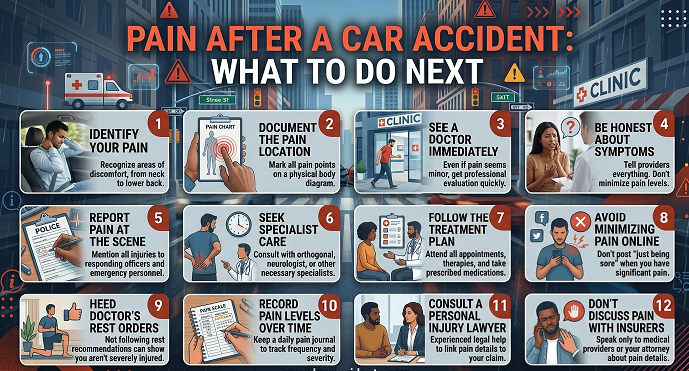
Pain After a Car Accident: Why Symptoms Can Appear Later and What to Do Next
You may walk away from a car accident believing that you are fine, only to wake up later with neck pain, back pain, headaches, stiffness, dizziness, bruising, or limited movement. That experience can be confusing—especially when the collision did not seem severe at first.
Do not ignore new symptoms after a crash. Your health should come first, and prompt medical attention can also create a clear record of what you experienced after the accident.
This guide explains why post-accident symptoms may not always be obvious immediately, what warning signs require urgent care, and how to protect your health and insurance claim without making assumptions about your injuries.
Important: This page provides general information only. It is not medical or legal advice. If you have severe symptoms or believe you may have a medical emergency, call 911 or seek emergency care immediately.
Can Pain Start Days After a Car Accident?
Yes. Some people do not fully notice pain or physical limitations until hours or days after a collision. In the immediate aftermath, you may be focused on getting home, arranging transportation, speaking with police, or dealing with vehicle damage.
Symptoms may also become more noticeable once you return to normal activities, try to sleep, sit at a desk, lift objects, drive, or exercise. Even if you did not need an ambulance at the scene, it is reasonable to monitor how you feel and seek medical advice when symptoms appear.
It is better to let a qualified medical professional evaluate your condition than to assume soreness, headaches, numbness, or dizziness will simply disappear on their own.
Common Symptoms to Take Seriously
After a car accident, pay attention to changes in how your body feels and functions. Symptoms can affect your neck, back, shoulders, head, arms, legs, sleep, concentration, and daily movement.
- Neck pain, stiffness, or reduced range of motion
- Back pain or muscle spasms
- Headaches that begin or worsen after the crash
- Shoulder, arm, wrist, hip, knee, or leg pain
- Numbness, tingling, weakness, or burning sensations
- Dizziness, balance problems, nausea, or vision changes
- Difficulty sleeping or unusual fatigue
- Memory, concentration, or “foggy” thinking problems
- Emotional changes, including anxiety, irritability, or sadness
The Centers for Disease Control and Prevention lists headaches, dizziness, nausea, vision problems, concentration difficulties, memory issues, sleep changes, and emotional changes among potential concussion symptoms. You can review the CDC’s official concussion signs and symptoms guidance for more information.
When Should You Seek Emergency Medical Care?
Some symptoms should not wait for a routine appointment. Seek emergency medical help or call 911 if you or someone else has severe or rapidly worsening symptoms after a crash.
Examples can include a worsening headache, repeated vomiting, slurred speech, weakness, numbness, reduced coordination, seizures, unusual confusion, loss of consciousness, or one pupil larger than the other. The CDC provides a detailed list of warning signs for traumatic brain injury and concussion.
When in doubt, prioritize your safety. An online article, insurance representative, friend, or family member cannot diagnose an injury.
What to Do When Symptoms Appear Later
If you begin feeling pain or other symptoms after leaving the accident scene, take practical steps without delay.
1. Get Medical Advice
Contact a doctor, urgent care clinic, or appropriate medical provider and explain that you were recently involved in a car accident. Be honest about the collision, your symptoms, when they began, and how they affect your normal activities.
Follow the treatment plan you receive. If you are referred for imaging, physical therapy, specialist care, or follow-up visits, keep records of every appointment and instruction.
2. Start a Symptom Journal
Write down the date, time, and details of new symptoms. Keep the journal factual and simple. You do not need to write a long diary entry every day.
For example:
“Tuesday, 7:30 a.m.: Neck stiffness made it difficult to turn left while driving. Took prescribed medication. Missed two hours of work for urgent care appointment.”
This type of note may help you remember details later when speaking with a doctor, insurer, or attorney.
3. Save Medical Documents and Receipts
Create one folder for accident-related records. Include:
- Emergency room or urgent care visit summaries
- Doctor’s notes and treatment recommendations
- Prescriptions and pharmacy receipts
- Imaging records and test results
- Physical therapy and specialist referrals
- Medical bills, copays, and transportation expenses
- Work notes and proof of missed income
Good recordkeeping makes it easier to understand your medical care and any financial impact of the accident.
4. Report the Claim Promptly
Review your insurance policy and report the accident according to its requirements. When you speak with an insurer, provide accurate basic information, but do not guess about fault, injuries, or the full cost of treatment before you know the facts.
The National Association of Insurance Commissioners advises consumers to collect driver, vehicle, witness, officer, weather, and road-condition information after a collision, and to contact their insurer to begin the claims process. Read its official guide on filing an auto insurance claim.
5. Keep All Insurance Communications
Save emails, letters, text messages, claim forms, repair estimates, and settlement offers. After each phone conversation, write down:
- The date and time of the call
- The representative’s name and contact information
- Your claim number
- A short summary of what was discussed
- Any next step or deadline mentioned
Clear notes can help prevent confusion if your claim is transferred to another adjuster or takes longer than expected.
Why Medical Documentation Matters
Insurance claims are often evaluated through records. If you have pain, receive treatment, miss work, or face medical expenses, documentation helps show what happened after the accident.
This does not mean every symptom will lead to a successful claim or that every injury has the same value. It means you should avoid leaving important information undocumented.
Medical records, invoices, visit summaries, diagnostic results, photographs of visible injuries, and a consistent timeline can all help explain your situation more clearly than memory alone.
Should You Accept a Quick Settlement Offer?
After a crash, an insurance company may contact you early with questions or an offer. Before accepting any settlement, make sure you understand what it covers and whether you have reached a point where your injuries and treatment needs are reasonably clear.
A settlement may require you to release future claims related to the accident. If you have ongoing symptoms, disputed fault, significant medical bills, missed work, or uncertainty about your condition, consider getting legal advice before signing anything.
For more information about actions that may weaken an accident claim, read our guide: 12 Mistakes That Can Quietly Wreck Your Car Accident Claim.
When It May Help to Speak With a Car Accident Lawyer
Not every accident requires an attorney. However, a legal consultation may be useful if your accident involved serious injuries, delayed symptoms, lost income, a denied claim, multiple vehicles, a commercial vehicle, an uninsured driver, or disagreement about who caused the crash.
A car accident lawyer can review the available facts, explain the relevant deadlines in your state, communicate with insurance companies, and help you understand your options.
Have Questions About Your Car Accident Claim?
If pain or other symptoms appeared after a crash, do not assume it is too late to take action. Gather your records, seek appropriate medical care, and consider speaking with a qualified car accident attorney about your situation.
Helpful Official Resources
- National Association of Insurance Commissioners: Filing an Auto Claim
- Find Your State Insurance Department
- CDC: Concussion Signs and Symptoms
- CDC: Traumatic Brain Injury Warning Signs
Frequently Asked Questions
Is it normal to feel pain a day after a car accident?
Some people notice soreness, stiffness, headaches, or other symptoms hours or days after a collision. Because every injury and accident is different, speak with a medical professional if you have pain or symptoms that concern you.
Can I go to the doctor after leaving the accident scene?
Yes. If symptoms begin after you leave the scene, you can seek medical care and explain that you were recently involved in a car accident. Do not delay emergency care if you have serious or worsening symptoms.
What should I tell the insurance company about my injuries?
Be truthful and provide accurate basic information. Avoid guessing about your diagnosis, recovery time, fault, or future medical needs before you have the information necessary to answer confidently.
What if the insurance company denies my claim?
Review the denial letter carefully, keep all communications, and consider speaking with a qualified attorney or your state insurance department to understand available options.
Disclaimer: This content is for general educational purposes and does not create an attorney-client relationship. Laws, insurance requirements, deadlines, and claim outcomes vary by state and by the facts of each case.
Comments (0)