How Much Is My Car Accident Case Really Worth? (American Insider Breakdown)
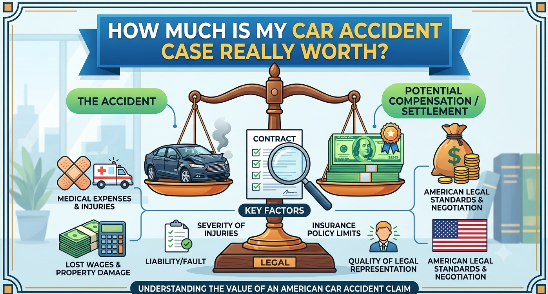
How Much Is My Car Accident Case Really Worth? (American Insider Breakdown)
If you were just in a car crash in the United States and you’re wondering, “How much is my car accident case really worth?”, you’re not alone. Every day, injured drivers and passengers search online for quick answers, settlement calculators, and insider tips on what their claims might be worth. This guide breaks everything down in plain English, with practical examples and helpful resources, so you can understand what really drives the value of a car accident case in the U.S.
Read This Before You Trust Any Online Settlement Calculator
If you Googled “car accident settlement calculator,” you’ve probably seen a few flashy tools promising to tell you exactly what your case is worth in seconds. These calculators can be useful as a rough starting point, but they are not a substitute for an actual review by a real injury lawyer who understands your specific injuries, your state’s laws, and the insurance companies involved.
Think of online calculators like weather apps: they can tell you it might rain, but they can’t tell you exactly when the storm will hit your street. Your case value depends on details that no generic tool can fully capture: how the crash happened, what your medical records show, how long you’ve been out of work, and how your state handles fault and insurance.
If you want to see how a calculator works while still understanding its limits, you can check out resources like:
- Car Accident Settlement Calculator by State
- Car Accident Settlement Calculator (Express Legal Funding)
The Three Main Building Blocks of Case Value
Most American car accident cases are built on three main types of damages: economic damages, non-economic damages, and sometimes punitive damages. Understanding each category will help you see where your case value actually comes from.
1. Economic Damages (Money You Can Prove)
Economic damages are the financial losses you can back up with documents like bills, invoices, and pay stubs. They usually include:
- Emergency room and hospital bills
- Follow-up doctor visits and specialist appointments
- Physical therapy and rehabilitation costs
- Prescription medications and medical devices
- Lost wages if you missed work because of the accident
- Future medical care and future lost earning capacity in serious cases
The more complete and organized your documentation is, the easier it is for an attorney to argue for a higher economic loss. Keep copies of every bill and record starting from the day of the crash.
2. Non-Economic Damages (What You Feel, Not What You Can Prove With Receipts)
Non-economic damages cover losses you can’t show with a receipt, such as:
- Pain and suffering
- Emotional distress and anxiety
- Loss of enjoyment of life
- Loss of intimacy or companionship (loss of consortium)
These damages can make up a large part of a serious car accident settlement, especially when injuries are long-term, permanently disabling, or require surgery. However, insurance companies often fight hard to minimize them.
3. Punitive Damages (Rare, But Powerful)
Punitive damages are not about compensating you for your losses. They exist to punish extremely reckless or intentional behavior, such as drunk driving, street racing, or intentional road rage. These damages are only available in limited situations and depend heavily on the laws of the state where the crash happened.
How Pain and Suffering Is Really Calculated
Pain and suffering is one of the most misunderstood parts of car accident settlements. There is no fixed national formula, but two common approaches are widely used in the United States: the multiplier method and the per-diem method.
The Multiplier Method
In the multiplier method, your total economic damages (medical bills + lost wages) are multiplied by a severity factor, usually somewhere between 1.5 and 5.0 depending on how serious your injuries are.
For example:
- Minor soft tissue injuries with quick recovery might be closer to 1.5–2.0
- Fractures, surgery, and long rehabilitation can push the multiplier toward 4.0–5.0
Insurance companies often try to keep that multiplier as low as possible by questioning your treatment, blaming pre-existing conditions, or arguing your injuries are not as severe as you claim.
The Per-Diem Method
In the per-diem method, a daily “pain” value is assigned and then multiplied by the number of days you are expected to suffer or recover. For example, a lawyer might argue that your daily pain and disruption to life is worth a certain amount per day over a period of months.
The longer your recovery and the more your injuries affect your daily routine, the higher that per-diem figure tends to be. Detailed medical notes and consistent follow-up appointments support this approach.
Why Your State and Fault Rules Matter So Much
In the United States, where your crash happened can be just as important as how it happened. Each state has its own rules about fault, minimum insurance limits, and deadlines for filing a claim (statute of limitations).
At-Fault vs. No-Fault States
In at-fault states, the driver who caused the crash (and their insurance company) typically pays for your damages. In no-fault states, your own policy may pay first under “personal injury protection” (PIP) or similar coverage, and you may only bring a traditional liability claim if your injuries are serious enough under that state’s law.
To see how your state handles fault and car accident claims, you can review state-specific information on: Nolo’s Car Accident Claims Resources or check your state’s official Department of Insurance website.
Comparative Negligence
Many states use comparative negligence rules, which reduce your compensation if you are found partly at fault. For example, if you are 25% at fault, your settlement can be reduced by 25%, even if your injuries are well proven.
Some states bar recovery if you are 50% or 51% at fault, while others allow partial recovery at any percentage. This is one reason why a local attorney is so important: they know how your state’s rules apply to your case.
Insurance Policy Limits
Even if your case is “worth” six figures on paper, you cannot collect more than the available liability limits unless there are additional policies or umbrella coverage. Some drivers carry only the minimum required by law, which may be far lower than your actual losses.
In serious injury cases, your lawyer may look for other sources of coverage, such as underinsured motorist (UIM) benefits on your own policy, or multiple defendants who share liability.
Real-World Factors That Can Quietly Raise or Lower Your Case Value
Textbook rules are important, but real-world details often make a big difference in what your case is actually worth. Here are some factors that can quietly increase or decrease your settlement:
Quality and Consistency of Your Medical Treatment
Gaps in treatment, missed appointments, or stopping therapy too early are frequently used against you to argue that your injuries weren’t serious. Consistent medical care shows that you took your injuries seriously and helps support a stronger pain and suffering claim.
Evidence From the Crash Scene
Photos, videos, witness contact information, police reports, and any dashcam or surveillance footage can all strengthen your case. Clear liability evidence reduces the defense’s ability to blame you or deny responsibility.
The National Highway Traffic Safety Administration (NHTSA) publishes useful data and safety information that can help show patterns of dangerous driving behaviors and accident causes.
Your Credibility
Insurance adjusters and juries pay attention to how consistent your story is: what you told the police on the scene, what you told ER staff, what your doctors wrote in their notes, and what you said on recorded calls with the insurance company.
Honest, consistent statements help your case. Exaggerations or contradictions can seriously damage your credibility and reduce your payout.
The Lawyer and the Venue
The reputation and experience of your lawyer, and the local court where your case might be heard, can influence how an insurance company values your claim. Some venues are considered more favorable to injured plaintiffs, which can push insurers to offer fairer settlements sooner.
Why the First Offer Is Almost Never the Real Value of Your Case
If you have already received an offer from an insurance company, remember: first offers are usually designed to close your claim quickly, not to fully compensate you for everything you’ve lost.
Early offers usually come before:
- Your medical treatment is finished
- Your long-term prognosis is clear
- Anyone has seriously evaluated your future losses
Once you sign a release, you typically cannot go back and ask for more money, even if you later learn you need surgery or will miss more work than expected. That’s why it’s critical to talk with an experienced car accident attorney before accepting any settlement.
When You Should Absolutely Talk to a Lawyer
Not every minor fender-bender needs a lawyer, but there are clear signs that your case is too serious to handle alone. You should strongly consider calling an attorney if:
- You have fractures, surgery, or long-term physical limitations
- You’ve been out of work for weeks or months because of your injuries
- The insurance company is blaming you or saying you were partially at fault
- There are multiple vehicles or insurance policies involved
- Someone was killed or there is a potential wrongful death claim
A good lawyer doesn’t just chase a big number. They help protect you from signing away your rights, missing important legal deadlines, and leaving money on the table that you are legally entitled to recover.
To find a qualified personal injury lawyer in your area, you can use tools like:
- Avvo – Personal Injury Lawyers
- Martindale – Personal Injury Attorneys
Practical Steps You Can Take Right Now
If you’re trying to understand what your car accident case is really worth and protect your rights, here are some practical steps you can take today:
- Get prompt medical care and follow your doctor’s instructions
- Keep a folder with every bill, prescription, and medical record
- Write down how your injuries affect your daily life in a journal
- Avoid posting details about the accident or your injuries on social media
- Request a free consultation with a car accident attorney in your state
The more proactive and organized you are, the easier it is for your lawyer to fight for the true value of your claim — not just the quickest check an insurance company wants to send.
Legal Disclaimer
This article is for general informational purposes only and does not create an attorney-client relationship or replace legal advice from a licensed lawyer in your state. Every car accident case is unique, and laws vary from state to state. You should consult a qualified personal injury attorney to get a personalized evaluation of your claim.
Frequently asked questions
How do insurance companies calculate what my car accident case is worth?
Most insurers start with your economic damages — medical bills, lost wages, and property damage — then apply internal formulas to estimate pain and suffering based on injury severity, treatment length, and fault, all within the limits of the policies involved and the laws of your state.
Is an online car accident settlement calculator accurate?
Online calculators can give you a rough range, but they can’t fully factor in state‑specific fault rules, policy limits, venue, future medical needs, or how a jury might see your case, so they’re best used as a starting point before you talk to an actual injury lawyer.
Can I increase the value of my car accident case?
You can often improve your case by getting prompt and consistent medical care, following doctor’s orders, documenting symptoms, preserving evidence from the crash, avoiding social‑media posts about the accident, and speaking with a qualified car accident attorney before accepting any settlement offer.
Comments (0)